
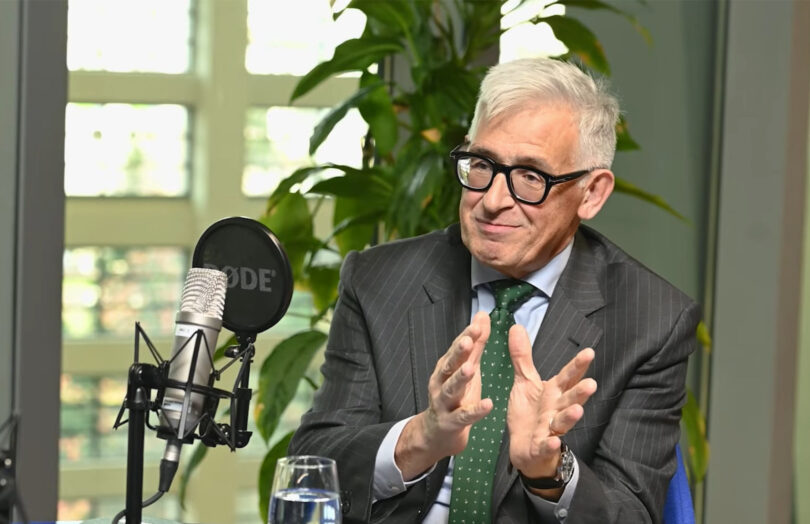
ECB Executive Board member Piero Cipollone yesterday confirmed the Eurosystem plans to go live in September with Pontes, its solution for settling DLT transactions in central bank money. Speaking at a Bundesbank symposium, he said initial users will pay only one off onboarding fees to encourage adoption. Operating hours will gradually extend to 22.5 hours per business day, with a 24/7 multi currency service targeted for mid 2028 (explored in detail here and here).
Yet the speech’s real message concerned law rather than technology. Cipollone argued that tokenization is not an incremental upgrade to one step of a transaction. It could reorganize the entire financial value chain, settling cash and asset legs atomically while smart contracts handle coupon payments, collateral movements and compliance checks. Europe’s opportunity is to build an integrated tokenized market from scratch rather than replicate the fragmentation of its legacy infrastructure. Today that spans 31 CSDs, 14 clearing houses and 323 trading venues.
He identified three risks along the way. They are fragmentation across incompatible platforms, the loss of the central bank money anchor if markets settle in private assets, and dependence on infrastructure or technology controlled outside Europe. And he outlined three conditions for success. These are interoperability based on common standards, public private cooperation to drive adoption, and a legal framework that matches the technology.
The third condition is the hardest, and the one where Europe’s legislative machinery has so far delivered the least. While he touched on some of the tokenization growth seen in the US, he didn’t explore the legal architecture that allows the US to grow with less friction. Cipollone was blunt that “advanced technology cannot compensate for fragmented law.”
Article continues …

Want the full story? Pro subscribers get complete articles, exclusive industry analysis, and early access to legislative updates that keep you ahead of the competition. Join the professionals who are choosing deeper insights over surface level news.