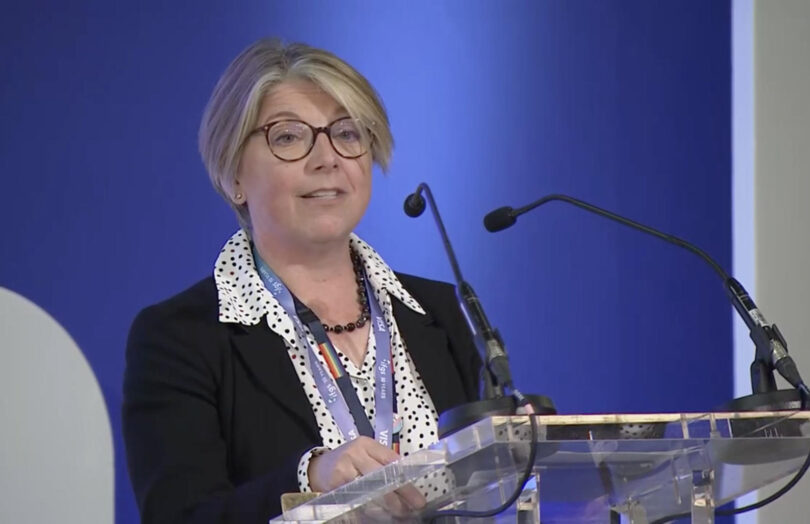
Sarah Breeden, Deputy Governor of the Bank of England, outlined how tokenized deposits and stablecoins fit into its retail payments plans during a speech. The central bank is taking a leading role in translating the UK retail payment strategy into the design of a new retail payment infrastructure as part of a public-private partnership. The private sector will build and fund the infrastructure.
Multiple types of money will need to be supported for retail payments, both at point of sale (PoS) and online, including conventional bank deposits, tokenized deposits, (systemic) stablecoins and a potential future retail CBDC. Notably, Breeden only mentioned systemic stablecoins, not others. These are envisioned as very substantial stablecoins used for real world rather than crypto payments. So far the specific size qualification has not yet been specified, but as part of its consultation, the central bank made clear that any stablecoins primarily used in the crypto sector are unlikely to be considered systemic.
The reason for restricting the type of stablecoins supported by the new retail infrastructure likely comes down to stronger risk management including financial stability. Systemic stablecoins will be jointly regulated by the Bank of England and Financial Conduct Authority, and have different reserve requirements compared to non-systemic stablecoins. Specifically, at least 40% of reserves will be held at the central bank (unremunerated).
Article continues …

Want the full story? Pro subscribers get complete articles, exclusive industry analysis, and early access to legislative updates that keep you ahead of the competition. Join the professionals who are choosing deeper insights over surface level news.