
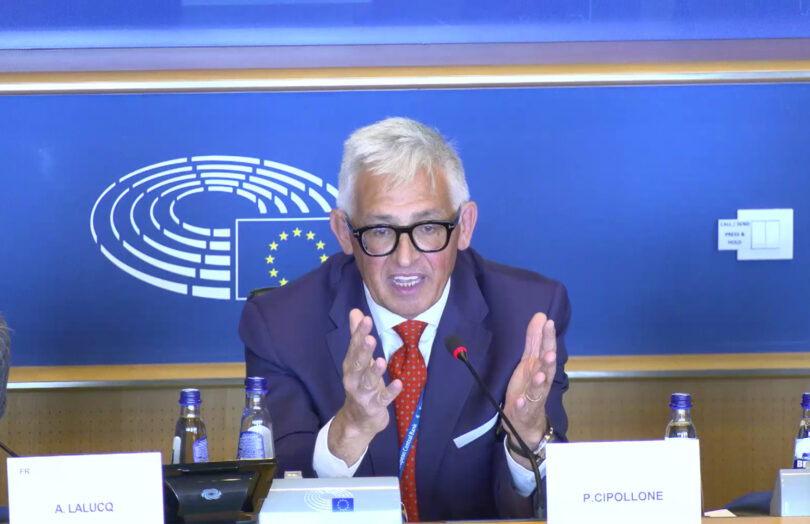
Today European Central Bank (ECB) board member Piero Cipollone provided an update on the digital euro to the ECON Committee of the European Parliament. While his introductory talk focused on the resilience and inclusion advantages of the central bank digital currency (CBDC), he faced many questions from members of parliament (MEPs).
The central banker seems optimistic that legislation will be passed, citing support from the European Council, which represents the governments of each EU member state. Given the ECB had planned to start digital euro infrastructure build work after October 2025, it has had to readjust timescales, now hoping for legislation in Q2 2026. The infrastructure build would take 2.5 to three years. That puts the potential launch date in 2029 at the earliest, but 2030 more likely.
However, Europe’s complicated legislative process also requires the support of the European Parliament. Based on the questions, MEPs appear split between support and opposition. The lead negotiator (rapporteur), MEP Fernando Navarrete Rojas, continues to pose pugnacious questions, as he did in previous sessions. He described the digital euro as “overcomplicated” and asked about the costs to banks. Below is a deep dive into the range of questions asked.
Article continues …

Want the full story? Pro subscribers get complete articles, exclusive industry analysis, and early access to legislative updates that keep you ahead of the competition. Join the professionals who are choosing deeper insights over surface level news.