
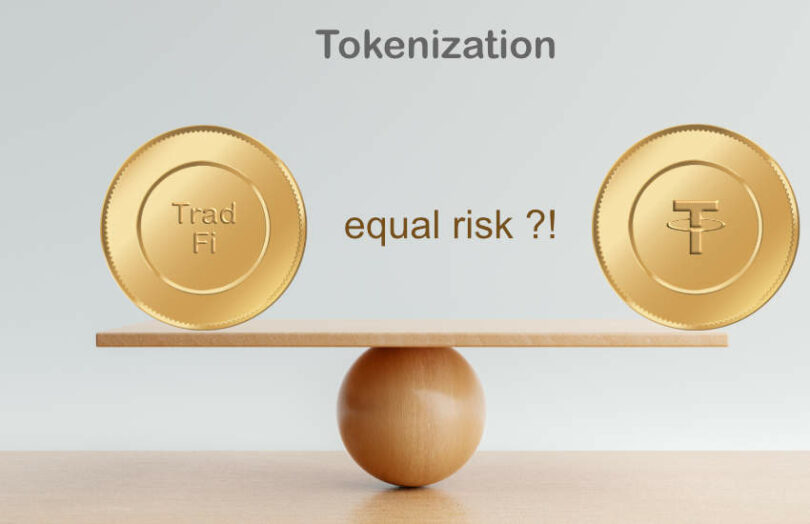
Earlier this month, the US Federal Reserve published a paper assessing the financial stability implications of tokenization. While it acknowledges that tokenization volumes are currently insignificant, it warns of a host of potential risks. In several instances, the Fed infers that the volatility witnessed in the cryptocurrency sector will impact tokenization. The document barely differentiates between tokens issued by regulated financial institutions and entirely unregulated crypto firms.
For example, the same table lists Tether gold alongside tokenized bonds issued by the European Investment Bank with help from four global systemically important banks. That’s the same Tether brand that was banned by the New York Attorney General for not always fully backing its stablecoin.
The authors acknowledge the “potential” benefits of tokenization of broadening access to markets, programmability and faster settlement. It notes the possibility of using tokenized assets for collateral and positive impacts on liquidity. Citing academic research on ETFs, it states that ETFs improved the liquidity and pricing in the underlying asset markets and tokenization could do the same.
Article continues …

Want the full story? Pro subscribers get complete articles, exclusive industry analysis, and early access to legislative updates that keep you ahead of the competition. Join the professionals who are choosing deeper insights over surface level news.