
The latest report on G20 cross border payments from the Financial Stability Board outlines the extensive work undertaken over the past six years by the public and private sectors to improve cross border payment speed, cost and transparency. Despite these efforts, with targets for the end of 2027 approaching, there’s surprisingly little to show for it so far.
One bright spot is wholesale speed. The share of payments credited within an hour has risen 3.2 percentage points since 2023 to 57%. But Swift say that may partly relate to better data quality following migration to ISO 20022. Retail speed went backwards with just 59.8% of people receiving funds within a day, a decline of 14.2 points since 2023. Global average costs of retail payments are largely unchanged. While the headline remittance cost has declined from 6.3% to 5.7%, the FSB attributes this entirely to a statistical adjustment, the rebasing of FX benchmarks.
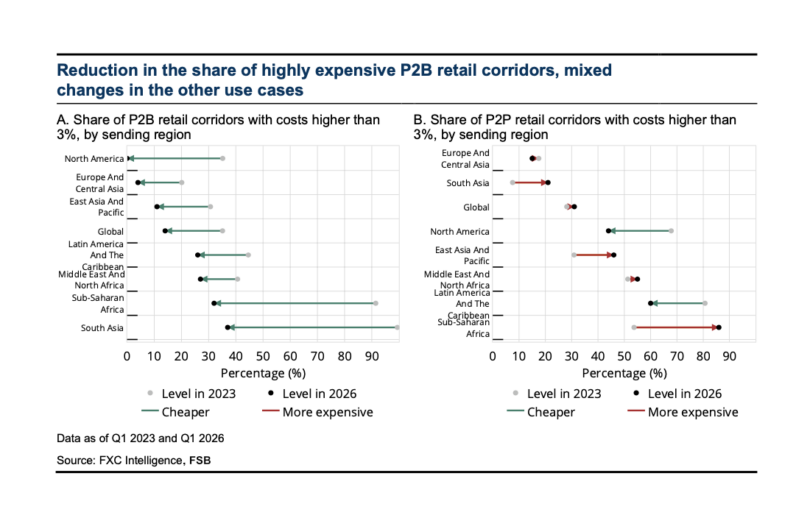
There are some genuine positives hidden in the figures. Payment corridors that cost more than 3% fell substantially (by 8.6 points since 2023) to 15.1%, although this glosses over regional disparity, such as significant increases in Sub Saharan Africa. P2B payments costs declined in every region and remittances received within an hour show a 7.4 point improvement since 2023 to 60%.
Article continues …

Want the full story? Pro subscribers get complete articles, exclusive industry analysis, and early access to legislative updates that keep you ahead of the competition. Join the professionals who are choosing deeper insights over surface level news.