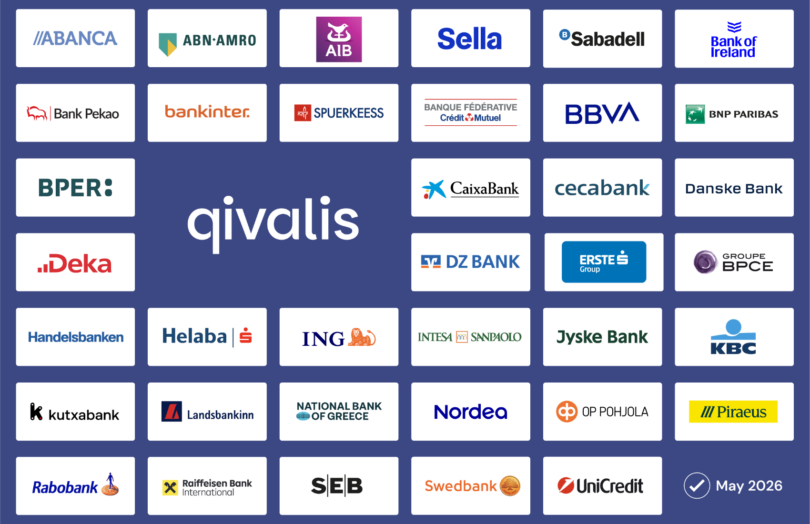
Today Qivalis, the Netherlands headquartered stablecoin consortium, announced the addition of 25 new banks. This brings the total count of banks to 37, less than eight months after unveiling the project. The planned launch of the stablecoin is in H2 2026, subject to Qivalis’ approval by De Nederlandsche Bank (DNB) as an Electronic Money Institution. What’s remarkable is that the regulatory path for stablecoins is clearer than tokenized deposits, which we’ll explore later.
The new member banks are ABANCA, ABN AMRO, AIB, Banco Sabadell, Bank of Ireland, Bank Pekao S.A., Bankinter, Banque et Caisse d’Épargne de l’État (Spuerkeess), Banque Fédérative du Crédit Mutuel, BPER, Cecabank, Erste Group, Groupe BPCE, Handelsbanken, Helaba, Intesa Sanpaolo, Jyske Bank, Kutxabank, Landsbankinn, National Bank of Greece, Nordea, OP Pohjola, Piraeus, Rabobank, and Swedbank. They join existing consortium members Banca Sella, BBVA, BNP Paribas, CaixaBank, Danske Bank, DekaBank, DZ BANK, ING, KBC, Raiffeisen Bank International, SEB and UniCredit.
Together the 37 banks are from 15 different states, with Spain accounting for seven. Eastern Europe is under represented with just Poland’s Bank Pekao. That said, Raiffeisen Bank International has a significant Eastern European presence. Poland is not a Eurozone country, and in fact nearly a fifth of the banks from four countries are not in the Eurozone and one (Iceland) is part of the EEA but not the European Union.
Article continues …

Want the full story? Pro subscribers get complete articles, exclusive industry analysis, and early access to legislative updates that keep you ahead of the competition. Join the professionals who are choosing deeper insights over surface level news.