Today the Monetary Authority of Singapore (MAS) issued a whitepaper on purpose bound money, a tokenized form of digital currency which restricts how money can be used. It is part of the Project Orchid retail central bank digital currency research (CBDC) initiative. Four pilot projects are being run, three of which involve Singapore’s largest banks, DBS, OCBC and UOB.
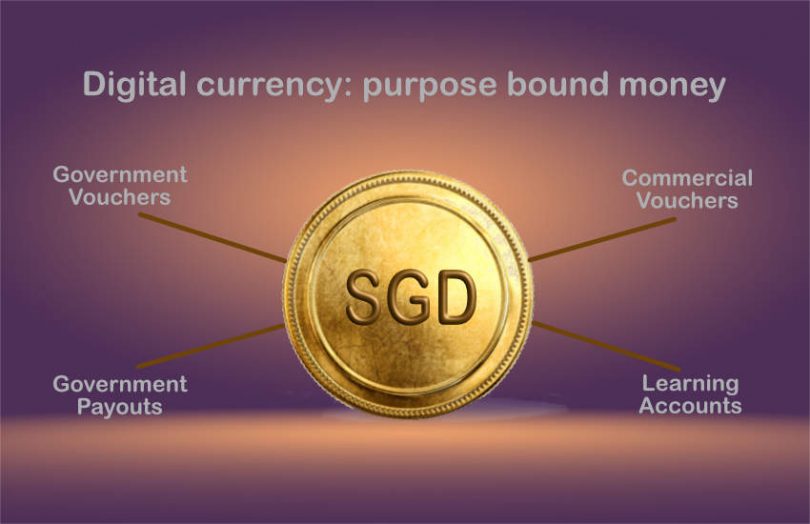
The central bank distinguishes between programmable payments – conventional payments with rules, programmable money, where the rules and the payment instrument are combined in a blockchain-based token, and purpose bound money (PBM), which it views as a third model building on programmable money. The money involved might be central bank digital currency, tokenized bank deposits or stablecoins, collectively referred to as digital Singapore dollars (DSGD). In the DBS pilot it is tokenized bank money.
At a practical level, PBM is a type of voucher. It could be a government voucher, where the money is intended for a specific use, or a private voucher, even a gift voucher. The challenge for merchants is they have to handle all the administration involved in accepting different kinds of vouchers. That includes signing up contracts and also processing the vouchers, which invariably results in a small delay of a day or two before the seller receives a cash payment.
Article continues …

Want the full story? Pro subscribers get complete articles, exclusive industry analysis, and early access to legislative updates that keep you ahead of the competition. Join the professionals who are choosing deeper insights over surface level news.