
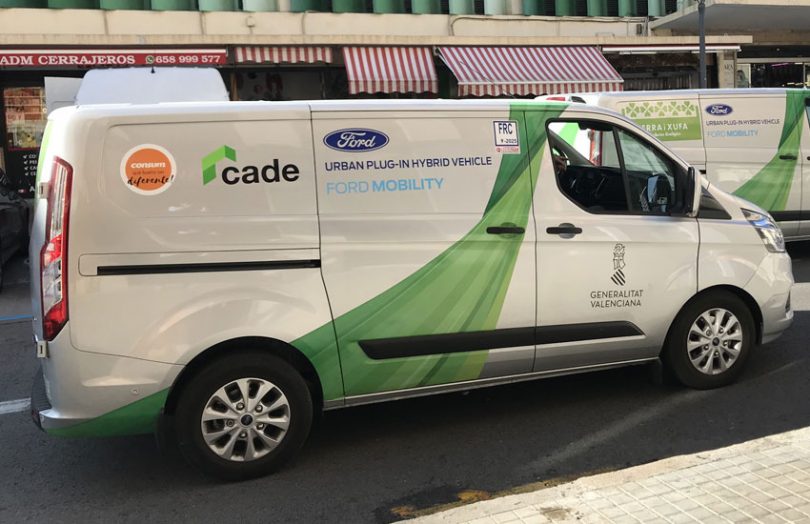
Ford researchers explored how dynamic geofencing and blockchain can be implemented in plug-in hybrid-electric vehicles (PHEVs) to help improve air quality in cities. The study took over three years, with Ford Transit and Tourneo PHEV trials in London, Cologne, and Valencia.
The vehicles used in the study had a feature to switch to zero-emission driving based on air quality and geofences if there was sufficient charge in the battery. A hybrid-electric van with an electric refrigeration unit powered independently of the vehicle’s batteries was also used to collect data.
Geofencing is used to determine geographic urban areas and boundaries. It uses GPS and Radio Frequency Identification technology to set up a geofence trigger around the boundaries and issues an alert when a person or device enters the demarcated area. In regards to the study, geofences are applied in urban areas to determine low-emission zones to keep traffic and pollution down. Dynamic geofencing technology enables these boundaries to move around according to air quality data.
Article continues …

Want the full story? Pro subscribers get complete articles, exclusive industry analysis, and early access to legislative updates that keep you ahead of the competition. Join the professionals who are choosing deeper insights over surface level news.