
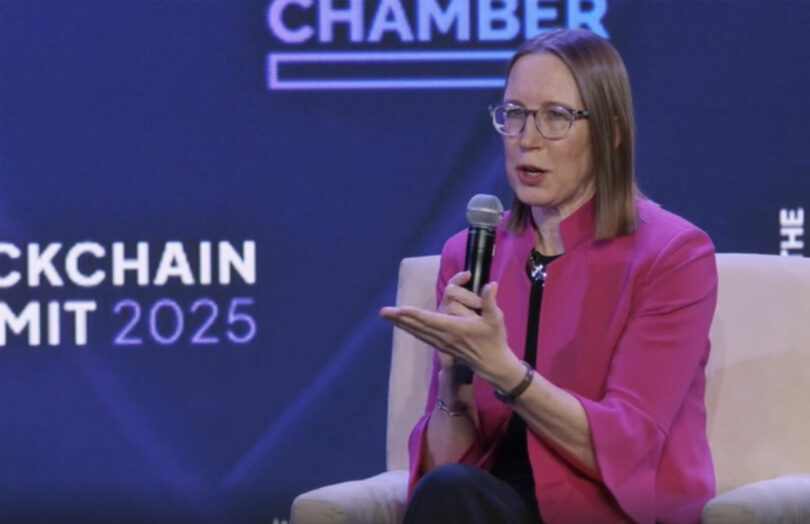
SEC Commissioner Hester Peirce issued a statement on Tuesday warning that parties managing crypto vaults and onchain lending strategies may fall within the scope of US securities laws, delivering the most pointed regulatory signal yet aimed at the curator model that now controls billions in DeFi deposits.
The statement, titled “Headstands and Summervaults,” did not name any firm. But it lands squarely on the architecture of protocols like Morpho, where anyone can create an isolated lending market defined by a single collateral and loan pair but most retail investors never touch those individual markets. Instead depositors place assets into vaults run by curators who decide which markets to allocate to, what collateral is acceptable and how much exposure to take. In traditional finance that judgment sits with an asset manager. In DeFi it has been outsourced to quantitative firms, but the function is the same.
Peirce acknowledged that vaults fall along a spectrum, from programmatic allocations determined solely by immutable smart contracts to allocations at the sole discretion of another person or group. The regulatory question turns on where a vault sits on that spectrum. Discretion is the trigger.
That distinction maps neatly onto the evolution of firms like Gauntlet, one of the most prominent Morpho curators with more than $1.5 billion under management. Gauntlet’s original work for the Aave lending protocol involved publishing recommended risk parameters that governance then voted on. Curating a Morpho vault is different. The curator holds the authority. That shift from analyst providing input to allocator exercising discretion is precisely the line Peirce is drawing.
Article continues …

Want the full story? Pro subscribers get complete articles, exclusive industry analysis, and early access to legislative updates that keep you ahead of the competition. Join the professionals who are choosing deeper insights over surface level news.